

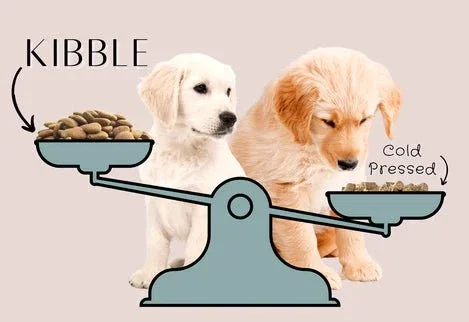
Cold-Pressed vs Kibble: What’s the Difference?
Walk down any pet food aisle and you’ll see dry food that looks broadly the same: crunchy brown pieces in a bag. But how dry dog food is made makes a real difference to what ends up in your dog’s bowl. Here’s how cold-pressed food and traditional kibble compare, and why more UK owners are making the switch.
How kibble is made
Most dry dog food is made by extrusion. Ingredients are mixed into a dough, cooked with steam at high temperature and pressure, then forced through a shaped die. The pieces puff up as they leave the machine, a bit like breakfast cereal. They are then dried and often sprayed with fats and flavourings to make them tasty again.
Extrusion is fast and cheap, which is why most dry food is made this way. The high heat can reduce some of the natural nutrients and flavour in the raw ingredients, so manufacturers often add them back in afterwards.
How cold-pressed food is made
Cold-pressed food is made at much lower temperatures. The ingredients are gently pressed into pellets rather than cooked under high pressure, and are not puffed up with steam. This gentler process helps keep more of the natural goodness of the ingredients, and the food smells and tastes more like real food.
The key differences
| Cold-pressed | Traditional kibble |
|---|---|
| Low and gentle cooking temperature | High heat and pressure |
| Dense, compact pellet | Light, puffed, crunchy texture |
| Breaks down gradually from the outside in | Can swell as it absorbs water |
| Natural aroma from the ingredients | Often coated in fats and flavourings |
| Smaller portions, as the food is nutrient-dense | Larger portions |
Why digestion matters
Because cold-pressed pellets break down gradually in the stomach, many owners find they suit dogs with sensitive tummies. Kibble can absorb water and expand after eating, which some dogs find less comfortable. Every dog is different, but if your dog has loose stools, wind or seems uncomfortable after meals, a change of food is worth considering. Speak to your vet if symptoms continue.
Is cold-pressed better for every dog?
Cold-pressed food is a great choice for most adult dogs, especially fussy eaters, dogs with sensitive stomachs and owners who want a more natural diet. It can cost a little more per bag than budget kibble. However, you usually feed less because the food is so nutrient-dense, so the cost per day is often closer than you’d expect.
Choosing a cold-pressed food
When comparing cold-pressed foods, check:
- The first ingredient. Look for a named meat or fish, not a cereal.
- Grain-free and filler-free recipes, if your dog is sensitive to grains.
- “Complete” on the label. This means the food provides all the nutrition your dog needs on its own.
- Where it’s made. UK production means shorter supply chains and UK quality standards.
Try FurRwe cold-pressed food
Our Supreme range is cold-pressed in the UK, grain-free and gluten-free, with no artificial additives. Choose Chicken Supreme or Ocean Supreme for dogs who prefer fish. Both are complete and balanced nutrition for adult dogs. Ready to make the change? Read our guide on how to switch your dog to cold-pressed food.
FAQs
Is cold-pressed dog food raw?
No. It’s gently processed at low temperatures, so it’s safe and easy to store like dry food, without the handling of raw feeding.
Do I need to soak cold-pressed food?
No. It breaks down naturally once eaten. Always provide fresh water.
Why does my dog need less cold-pressed food?
It’s denser and more nutrient-rich than puffed kibble, so a smaller portion gives the same nutrition. Follow the FurRwe Feeding Guide.




How to Switch Your Dog to Cold-Pressed Food: 10-Day Plan | FurRwe 1 day ago
[…] dogs. Choose Chicken Supreme, or Ocean Supreme for dogs who prefer fish. New to cold-pressed? Read Cold-Pressed vs Kibble: What’s the Difference? […]