Best Food for Dogs with Sensitive Stomachs: What to Look For
Loose stools, wind, an unsettled tummy after meals: if this sounds like your dog, you’re not alone. Sensitive stomachs are one of the most common reasons owners look for a new food. The good news is that the right diet and a few simple habits can make a real difference.
Signs of a sensitive stomach
- Soft or loose stools, or stools that change from day to day
- Frequent wind or a gurgling tummy
- Occasional vomiting, especially after eating
- Eating grass more than usual
- Being fussy or slow to finish meals
See your vet first if symptoms are new, severe or ongoing. Also see them if your dog has blood in their stools, repeated vomiting, weight loss or lethargy. These can be signs of an illness that needs treatment rather than a diet change.
Common causes
- Sudden food changes: switching food too quickly
- Rich or fatty foods: table scraps and high-fat treats
- Ingredient sensitivities: some dogs react to certain proteins, grains or additives
- Too many different foods: lots of treats, chews and toppers on top of meals
- Eating too fast, or stress and changes in routine
What to look for in food for a sensitive stomach
| Look for | Why it helps |
|---|---|
| A short, clear ingredient list | Fewer ingredients means fewer possible triggers, and it’s easier to spot what suits your dog |
| A named main protein, such as chicken or fish | Avoids vague “meat and animal derivatives”; try a different protein if your dog doesn’t suit one |
| Grain-free and gluten-free | Helpful for dogs sensitive to cereals such as wheat |
| No artificial colours, flavours or preservatives | Fewer additives to upset the tummy |
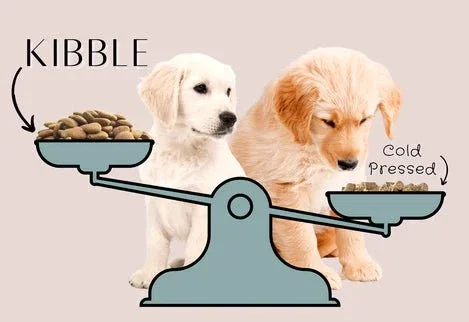
| Gentle processing | Cold-pressed food breaks down gradually in the stomach rather than swelling, which many sensitive dogs find easier |
| “Complete” on the label | Provides all the nutrition your dog needs, so there’s no need to add extras |
Feeding tips for a happier tummy
- Switch slowly. Follow our 10-day switching plan, or take it even slower for very sensitive dogs.
- Split meals. Two or three smaller meals a day are easier to digest than one large meal.
- Slow down fast eaters with a slow-feeder bowl or snuffle mat.
- Cut back on extras. Keep treats to under 10% of daily calories and choose simple, single-ingredient treats.
- Stick with it. Give a new food 4–6 weeks to judge how your dog is getting on, unless symptoms worsen.
- Keep a diary of food, treats and stools. It helps you and your vet spot patterns.
How FurRwe can help
FurRwe’s cold-pressed Supreme range is grain-free and gluten-free, with no artificial additives or fillers, and is made in the UK. Gentle cold-pressing keeps more of the ingredients’ natural goodness, and the pellets break down gradually in the stomach.
- Chicken Supreme is a tasty everyday choice.
- Ocean Supreme is a fish-based alternative for dogs who don’t get on with chicken.
For extra digestive support, explore FurRwe Gut & Digest.
Not sure which to choose? Contact our team and we’ll help.
FAQs
Is grain-free food better for sensitive stomachs?
It can help dogs who are sensitive to grains, but it isn’t the answer for every dog. The overall quality and simplicity of the recipe matters most.
Should I feed chicken and rice to settle my dog’s stomach?
A short bland diet is sometimes recommended by vets for a brief upset. It isn’t complete nutrition for the long term, so speak to your vet and move back to a complete food once your dog is better.
Could my dog have a food allergy?
True food allergies need diagnosing by a vet, usually with a strict elimination diet. If you suspect an allergy, talk to your vet before trying lots of different foods.
This article is for general information and is not a substitute for veterinary advice.